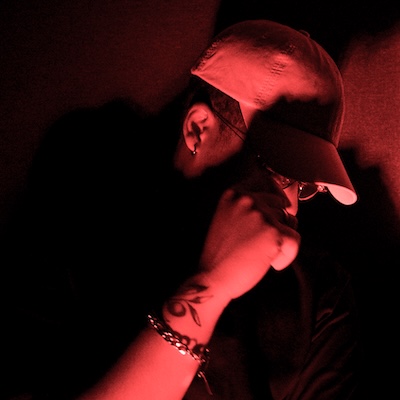
Geo Jordan is a GRAMMY-nominated producer, songwriter, multi-instrumentalist, and live member of Jungle whose work has moved between electronic music, neo-soul, live performance, and club culture for years. Alongside work with artists including Doja Cat, Amaarae, Bas, Ego Ella May, and Jungle, Jordan has quietly built a solo catalog that blends emotional songwriting with experimental electronic production. Alongside classical piano and jazz training, Jordan also taught himself bass, guitar, production, drum programming, and musical direction, something that now shapes the hybrid live-and-electronic feel of his music.
His new Revive EP on Aus Music pushes further into that world, bringing together broken beat, drum and bass, club music, introspective lyricism, and live instrumentation into something that feels equally suited for late-night headphones listening and dance floors. We caught up with Geo to talk about collaboration, DJ culture, queer nightlife, touring, trans identity, and building safer spaces through music.
I was listening to the EP last night, and I thought it felt perfect for listening to late at night. Were you thinking about a specific time of day or place while writing these songs?
I think I did for certain songs. ‘Keep On Running’ is just a straight-up summertime, outside kind of banger really, ideally in the daylight. But songs with a darker edge like ‘Busy Mind’ and ‘Waiting’ are definitely more evening-friendly. The EP as a whole is a bit of an exploration. It still has my signature sound, but it slightly deviates from some of the other stuff I’ve put out in the past.
I think why I associate it with being late-night listening is that even the more rhythmic tracks feel emotionally introspective.
I think different songs definitely belong to different times of day. ‘Keep On Running’ feels very outdoors, summer, daylight. But songs like ‘Busy Mind’ and especially ‘Waiting’ are much more evening-friendly.
‘Waiting’ is probably one of the more emotional songs on the project. It pulls from drum and bass, trip-hop, and more cinematic songwriting. I played it for a friend recently and they literally started crying, which was both amazing and slightly concerning at the same time. There’s always been an emotional side to my music though. Even when I’m making club music, I’m not usually writing straightforward love songs. Everything’s a little metaphorical and introspective. I like presenting heavier subjects in ways that still feel poetic rather than overly obvious or corny.
Were you thinking as you started this project, that they were being written specifically for the EP?
It actually started as a much bigger collection of songs because I’d been writing toward an album-length project for some time. I spent most of last year off tour just in the studio throwing paint at the wall and experimenting. A couple of the songs came from a separate project I made with one of my best friends from university, Luke Wynter, who plays in Nubiyan Twist. ‘Waiting’ and ‘Accelerate’ came from that collaboration and just fit naturally with the rest of the material.
‘Tease’ was one of the more recent songs. I had this tiny loop sitting there and originally tried to turn it into a full verse-chorus song, but it worked better as something more vibey and instrumental.
You’re somebody who’s collaborated a lot, whether that’s Doja Cat, Jungle, or other artists. How was this project different for you?
Most of my solo releases before this actually weren’t very collaborative. I’ve spent years touring and producing with other people, but my own music was usually just me doing everything myself. This was probably the most collaborative release I’ve made as a solo artist. It really invigorated my excitement for making music again because I was able to bring in friends and different perspectives. Just because you can do everything yourself doesn’t mean you should.
I imagine it’s also hard to give up control.
When I tell you I’m a control freak with production and arrangement, I really mean it. I know I’ve still got things to learn, but I know what I like sonically, so trusting someone else’s ideas was difficult. But everybody I worked with made me feel really safe creatively. Most of them are some of my best friends, so it became a very safe space to be vulnerable.
How did music start for you originally?
I was always around music because both my parents were DJs and musicians in different ways. I started playing piano at four years old and studied classical piano until I was about eleven. Then I went to Pimlico School in South London, which had an incredible music program. A lot of amazing musicians came out of there including my old bandmates from The Hics, and Nilufer Yanya, Kadiata, and Cosima. After that I studied jazz drums at Leeds Conservatoire, where I met Luke Wynter. Around the same time I was also teaching myself production, experimenting with MPCs and Logic, and starting bands.
It’s interesting because you come from such a live background, but your music also feels very connected to club culture. Where did that relationship come from?
DJing became huge for me after university. I started with this tiny little Hercules controller and taught myself through Virtual DJ while I was living in Leeds. When I moved back to London, I was working at Staples and hated it, so I just started going into bars around Shoreditch and Dalston asking if they needed DJs. At first I was basically just background music while people ignored me and asked for random songs, but eventually the gigs got bigger. I just love hearing music loud. Whether it’s mine, my friends’, or someone else’s music entirely, it hits differently in a club.
You recently started a no-phones club night, which honestly sounds amazing.
Yeah, it’s called No Phones. The whole idea is presence. People aren’t allowed to bring their phones in, and we even had Post-it notes where people could leave their numbers for someone they connected with. I think people are exhausted by constantly being observed or filmed. Clubs used to feel more free.
I feel like clubs have historically been important safe spaces for queer people. Do you think that’s part of what still draws you to dance music and nightlife?
Definitely, definitely. I think club environments encourage people to just be free without judgment, which is really the whole point of it for me.It’s escapism and freedom, but it’s also connection with people who feel like-minded and who love music. Being in a sweaty club with fellow queers is just fantastic. I love it. It still feels like ultimate freedom within music. I want emotional depth, experimentation, club energy, and vulnerability all existing together.
Loverboy is named after the Mariah Carey song. Do you have a favorite Mariah moment or relationship to her music?
‘Always Be My Baby’ instantly takes me back to childhood because my mum used to blast R&B around the house constantly.But beyond that, Mariah represented this level of Black vocal excellence that was just unbelievable. The whistle tones, the control, the athleticism. She reminded me a lot of Minnie Riperton in that sense, where the voice itself almost feels superhuman.
Singing actually came later to me than playing instruments did, because my relationship to my voice was deeply tied to my transness and my confidence. I always knew I could sing, but becoming comfortable enough to really put my voice forward emotionally took a long time. So artists like Mariah definitely had an impact on me, even indirectly, because they represented this complete fearlessness vocally.
Geo Jordan’s Revive EP arrives May 28 via Aus Music.
Listen to the Revive EP on Bandcamp
Geo Jordan Linktree
Interview by
George Alley