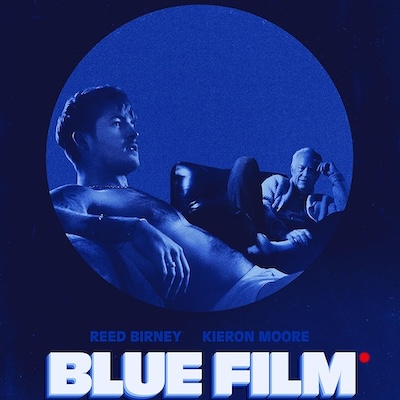
Let’s address the obvious: Blue Film is, on one level, a showcase for Kieron Moore’s body. The poster features Netflix’s Boots bad boy half-naked, while Moore plays a cam boy and escort, so anyone arriving primarily for the titillation of seeing almost every inch of him is unlikely to leave disappointed. And the film wastes no time delivering.
But then things shift.
We’re still being served body-ody-ody — and director Elliot Tuttle certainly knows what he has on screen — but he never relies on it. Following its knowingly provocative opening, Blue Film pivots into a complex and increasingly uncomfortable story, anchored by some remarkable acting from Moore and a script that handles its most delicate material with impressive tact.
It’s a film that seems designed to test its audience. Screenings have reportedly seen people walk out, while the film initially struggled to find a home at festivals before being accepted by the Edinburgh International Film Festival. From there, the doors have begun to open.
It’s probably best not to say too much about the plot. Blue Film is most effective when it slowly reveals what lies beneath its deliberately sexy surface, turning what initially looks like a provocative queer fantasy into something far more complicated. It’s frequently uncomfortable, but with purpose.
Moore and Reed Birney are both exceptional, constantly shifting the balance of power between them and, with it, our understanding of their characters. Their performances move between vulnerability, control, shame and desire, making it increasingly difficult to work out who is really holding the power — or how either man feels about the role he has been given.
Tuttle knows exactly what he has on screen, but the film is interested in far more than Moore’s body. Blue Film may get you through the door with Kieron Moore’s abs, but it leaves you with considerably more to think about than them.
Blue Film is released in UK cinemas 11th September; on digital platforms 19th October 2026