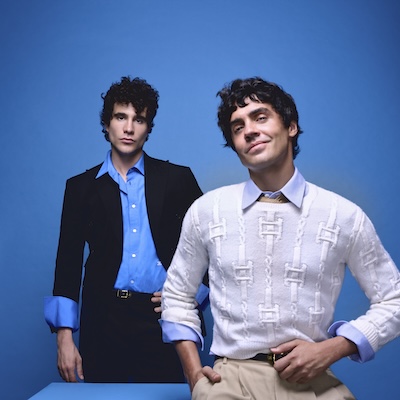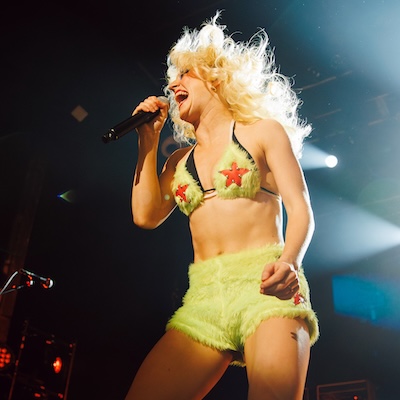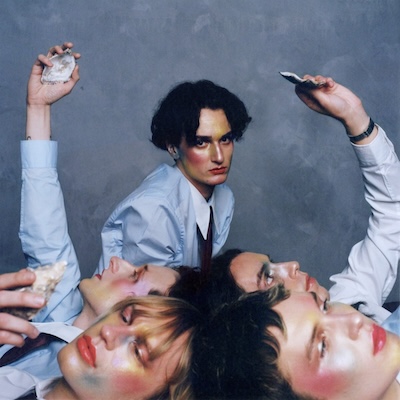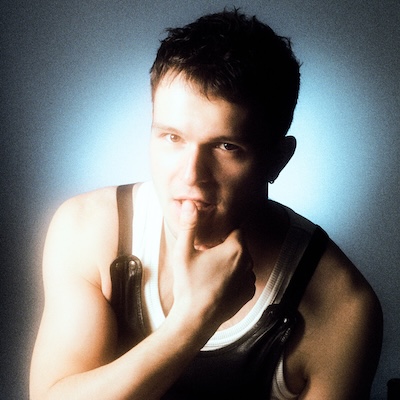
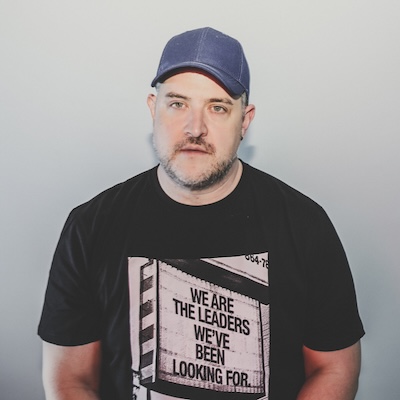
DJ Carl Michaels has spent decades moving through nightlife, from the rave scene and 611 Records to Philly gay clubs, Fire Island tea dances, Pride stages, and arena shows opening for artists like Carly Rae Jepsen, Rina Sawayama, Dragonette, and Kim Petras. His sets move between classic house, pop remix culture, and a deep knowledge of dance music history, something he now also shares through his Instagram series.
With an upcoming slot opening for Mika on May 5th at The Fillmore Philadelphia, plus a steady run of recurring parties, Michaels remains a constant presence on the dance floor. We caught up with him to talk about the evolution of DJing, tea dance culture, remix philosophy, and why nightlife could use a little more respect.
You’ve been DJing for decades, from raves to Pride stages. What do people still get wrong about nightlife?
People come out in a going-out mood, but they don’t always understand that we’re not there to party with them. We’re there to work. At a place like Tavern on Camac, I’m DJing, I’m doing the lights, I’m running the smoke machine. I’m thinking about transitions, what’s coming next, how the room feels. What people forget is that they’re interacting with a person, not a jukebox. We’re trying to read the room, keep the energy moving, and make it feel seamless.
Do you think the role of the DJ has changed, especially now that everyone’s right on top of you?
Yeah, completely. In the ’90s and early 2000s, the DJ wasn’t really accessible. When I was playing places like Pure, Voyeur, and the 2-4 Club, the booth wasn’t even on the same floor sometimes. You couldn’t just walk up and start talking to the DJ. The focus was on the music. Now the DJ is right in the middle of everything. People come up to insert themselves into what you’re doing. Even things like Boiler Room make me a little crazy. People are right behind the DJ, like less than a foot away. I throw people out of my booth. I’ve thrown my best friend out of the booth.
I feel like the unspoken rule is, if you’re in the booth, you’re there to look good. If the DJ wants to talk to you they will.
Exactly. That’s exactly it. Otherwise, you’re just in the way.
What happens when someone completely makes requests?
If I’m hired to play a full night of house and someone comes up in the middle of it asking for Tiësto, that throws me off completely. It’s not about context. Last night someone came up and asked me to play Ethel Cain in the middle of a set. It just doesn’t make sense in that moment. If the night’s winding down and people are drunk enough, maybe you throw them a bone. But in the middle of building something, you can’t just derail it.
How did this all start for you?
When I was 16, my grandmother gave all the kids $1,000 each, and I spent all of it on DJ equipment. I was already obsessed. As a kid, I used to make mixtapes by pausing and unpausing the radio so the DJs wouldn’t talk over the songs. From there I started DJing house parties and got pulled into the rave scene. There was a club doing an alternative night on Sundays that was basically techno in the suburbs, which became my entry point. Then Nigel Richards threw a rave in Langhorne at Sportland America, and that changed everything. I remember Rabbit in the Moon performing, sparks flying off a welder’s mask, and thinking, “What is this?”
That’s how I found 611 Records. I started hanging out there, asked if they needed help, and ended up driving to raves and selling mixtapes for a percentage, so I was making money, traveling, meeting people. Eventually I became the house buyer, and we put out a mix CD that sold around 4,000 copies in places like Tower Records. Then I toured the country with a DJ named Dayhota, doing about 40 cities in three months, flights every weekend, barely sleeping, not making much money, but seeing everything, sometimes playing for 2,000 people in places like San Francisco.
Then 9/11 happened. Travel slowed down, the scene shifted, and I eventually moved into working in gay clubs. That’s how I got to where I am now.
Do you feel like that ’90s New York and Philly sound still shapes how you DJ now?
I’ve always loved the straightforwardness of those remixes. You’d get one big club mix that really reworked the song, but then you’d also get a version that was basically the original, just extended and punched up.The sounds felt warmer. You could feel that people were actually working on them. There were organs, real drum programming, things weren’t perfectly locked in the way they are now.
I still love that. When I’m playing in a gay club and I hear a pop song I like, I don’t want it completely reinvented. I want it to hit harder, last longer, and work on a dance floor.
We’ll be performing together on July 12 at your night at Club 254. You did two very different remixes of George Alley’s “XRAY,” an artist I know very well….
The first one I did was the darker one, what became the Persons of Interest mix. That was more of a late-night, New York kind of energy.I started building it from scratch, chopping up the vocal, experimenting, and at a certain point it just clicked into place. That one took some time to figure out.
Then I went back and listened to your original again, really listened to it, and I thought, “This needs a tea dance mix.” It’s more classic, more uplifting. It made me really happy to work on that version, and I think it matches the energy of your track in a different way.
What’s the difference for you between a late-night set and something like a Sunday Tea?
Sunday Tea is a completely different energy. My first real tea dance was in Fire Island, and it’s broad daylight, people are social, they’re drinking, they’re talking. They’re not locked into the dance floor the same way. It can actually be harder, because people aren’t reacting as directly. You have to really read the room.
But It’s more collective, more joyful. You’ll see drag queens jumping in the pool, people just enjoying being there. It’s less about cruising and more about connection. It’s cool to be part of that tradition playing at Paradise in Asbury Park, the club owned by Shep Pettibone, which is kind of surreal given how much his remixes and production shaped that entire world.
There is no Vogue without Shep. You’ve opened for artists like Carly Rae Jepsen, Rina Sawayama, Kim Petras, and Dragonette.
My first big one was Kim Petras at the Stone Pony Summer Stage. It was about 4,000 people, and I just went up there and DJed. I didn’t really acknowledge the crowd. I thought that’s what I was supposed to do. Then Rina Sawayama was completely different. That felt magical. The Fillmore in Philly was packed, and I felt connected to the crowd in a way I hadn’t before.
Dragonette was really special for me. I’ve always loved her, and we ended up sitting and talking for like two hours after the show, which was surreal. Carly Rae Jepsen was chaotic. My equipment basically failed, which is why now I always insist on using house equipment, but someone told the crowd it was my birthday and they all sang to me, which was really sweet.
You’ve also been sharing music history on Instagram. Why do you think that’s resonating?
I think people want something real. I tried doing more produced versions where I wasn’t on camera, and no one cared.The ones where it’s just me talking those are the ones people respond to.I’ll talk about a track for 30 seconds, and people leave right when I stop talking. They don’t even stay for the song! But I’ve had a lot of people say they appreciate it, especially younger people who are discovering this music for the first time.
Loverboy is named after the hit Mariah Carey song. What stands out to you about her relationship to dance music?
Mariah’s really interesting because with David Morales, she would re-record her vocals specifically for the remix. She didn’t want her voice sitting wrong in the track or sounding like it didn’t belong.
A lot of artists just hand over the vocal and let someone else do whatever with it. She didn’t do that. She was like, “No, I’ll come in and do it again so it fits.” That level of care changed how people approached remixes. It made them feel more intentional, more integrated.
What do you hope for nightlife right now?
I’d like to see more DIY spaces and honestly, just more kindness. A lot of people want things without really putting in the work, and that’s not how it happens. I’ve been doing this for 30 years. You build relationships, you build trust, and that’s how you get opportunities.
Tickets for Mika with DJ Carl Michaels on May 5th
Carl Michaels’ Mixcloud and Instagram
Interview by George Alley
Photo: UV Lucas